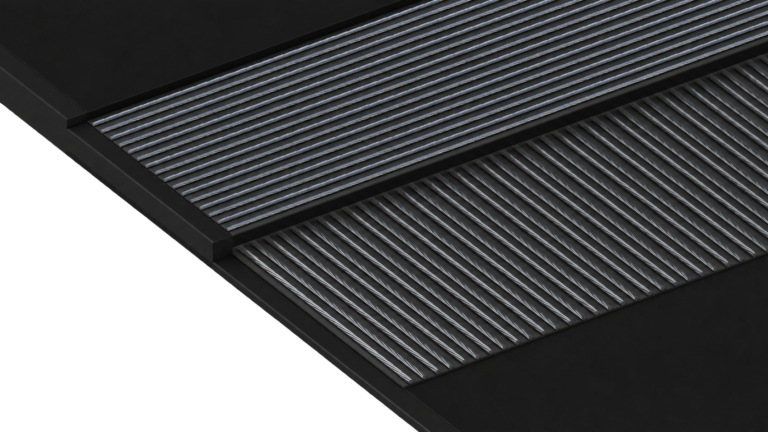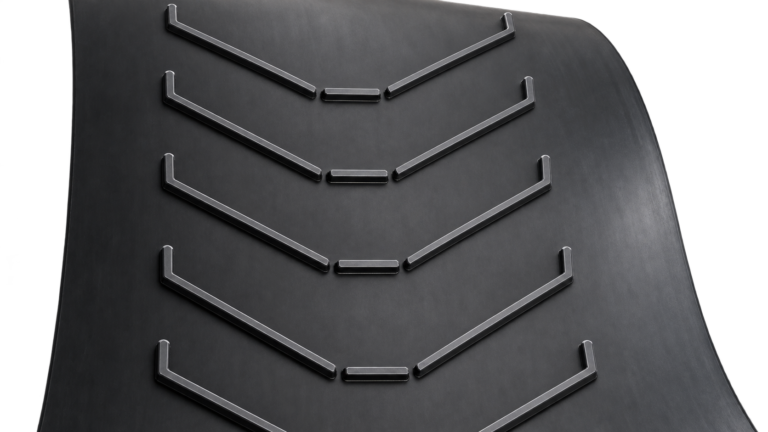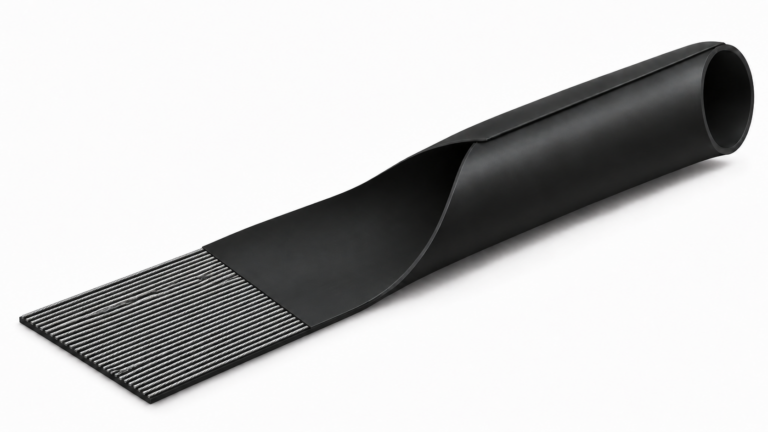

Get all the benefits of ENDURASTEEL, plus an elastic steelcord breaker embedded into the top cover. These transverse breaker cords solve a problem that is inherent in all steelcord belts; the reliance on rubber between the cords to provide lateral strength. At the moment of impact, the cushion rubber between the cords is put
into tension and becomes very susceptible to puncturing and cutting. To solve this problem, the elastic steelcord breakers absorb the impact tensions and provide maximum shield protection
Steel cord conveyor belt with transverse breaker protection
A low-elongation Endurasteel platform with added transverse reinforcement for higher-risk loading conditions.
- Increases impact resistance
- Increases load support
- Increases puncture and rip resistance
- Eliminates rip propagation
- No adhesion compromise
- Loop sensor rip detection compatible
- High cut resistance
- No flexibility compromise around pulleys
High-impact loading and transfer zones
The top-cover breaker distributes impact forces and increases resistance to puncture initiation. Material size, shape, drop height, loading direction and impact-bed support must be reviewed.
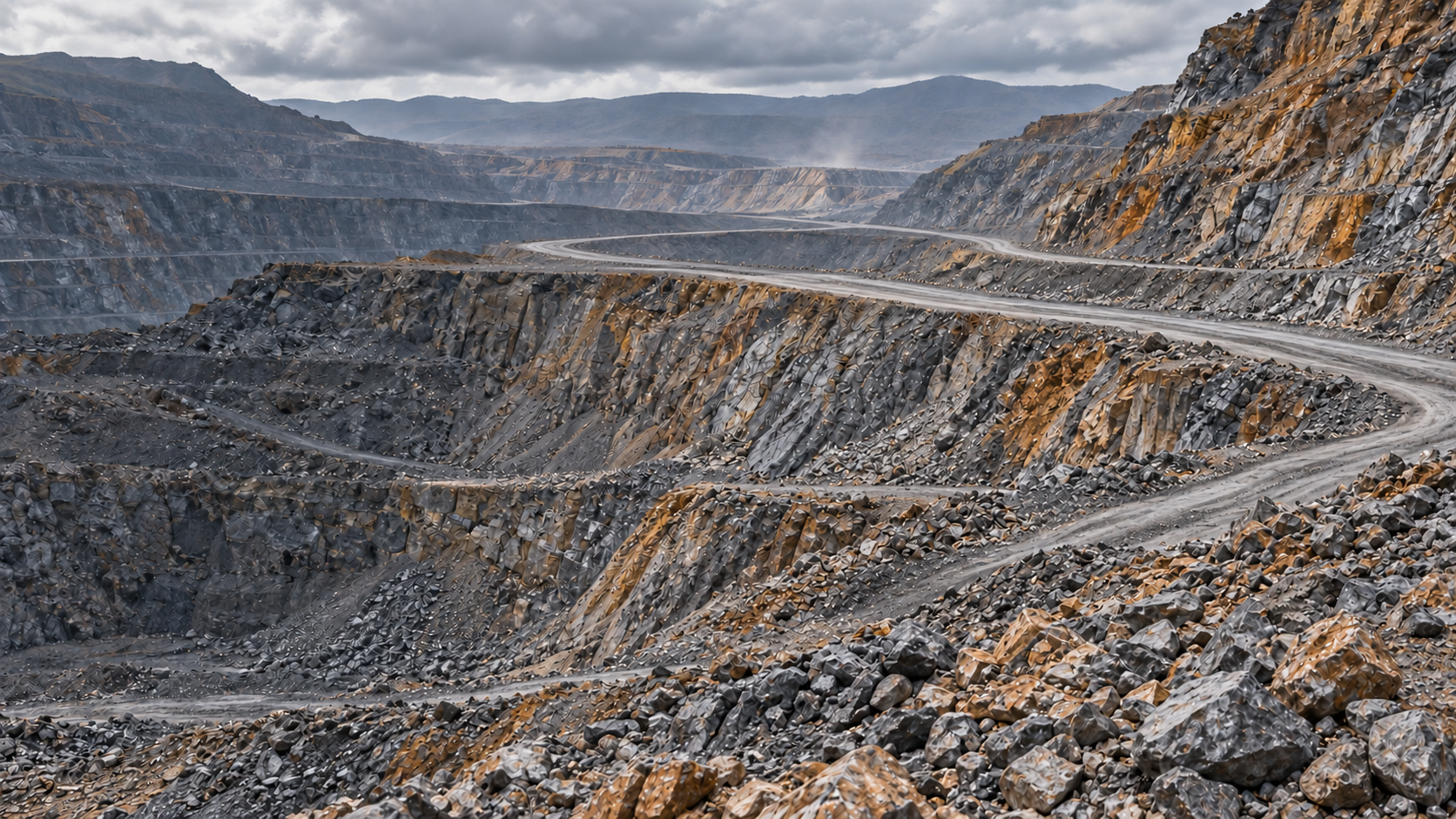
Pit and mine conveyors
For conveyors handling sharp rock, ore or foreign-object exposure where a puncture could develop into a major longitudinal rip. Covers, loading control and detection requirements should be considered together.
Long overland and mainline conveyors
For long or high-value conveyor routes where the consequence of an undetected rip is substantial. Endurasteel Plus can provide continuous passive reinforcement, while optional rip detection adds an active response layer.
High-tension incline and slope conveyors
For inclined systems combining high belt tension with difficult material loading. Drive, braking, take-up, rollback exposure, splice construction and emergency-response requirements remain critical.
Ship loaders and bulk terminals
For transfer systems where variable feed, foreign objects or repeated loading increase puncture and rip exposure. Conveyor mobility, weather, loading geometry and inspection access must be confirmed.