
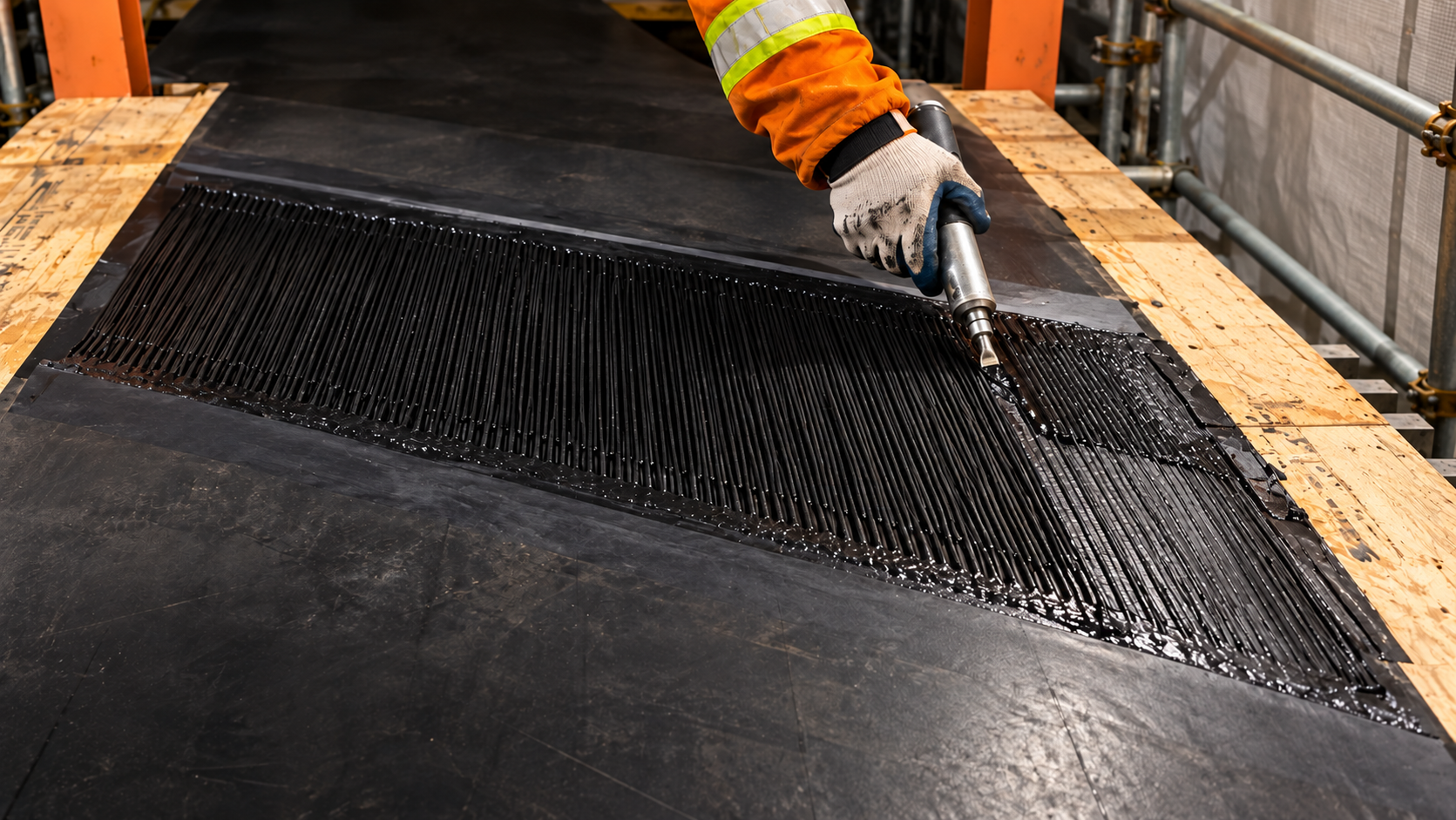
A splice does more than join two belt ends. It must carry repeated tension, flex through pulleys, withstand loading cycles and maintain alignment as an integral part of the belt. Textile and steel-cord constructions require different splice designs, lengths, materials and tooling. Applying generic dimensions, or shortening the specified splice to suit available equipment, can compromise how load is transferred through the joint.
Endurance reviews the belt specification, operating conditions and site-specific requirements before recommending the splice type and length, required press capacity, tooling and materials. Where applicable, splice preparation follows Endurance and DIN-based design guidance.
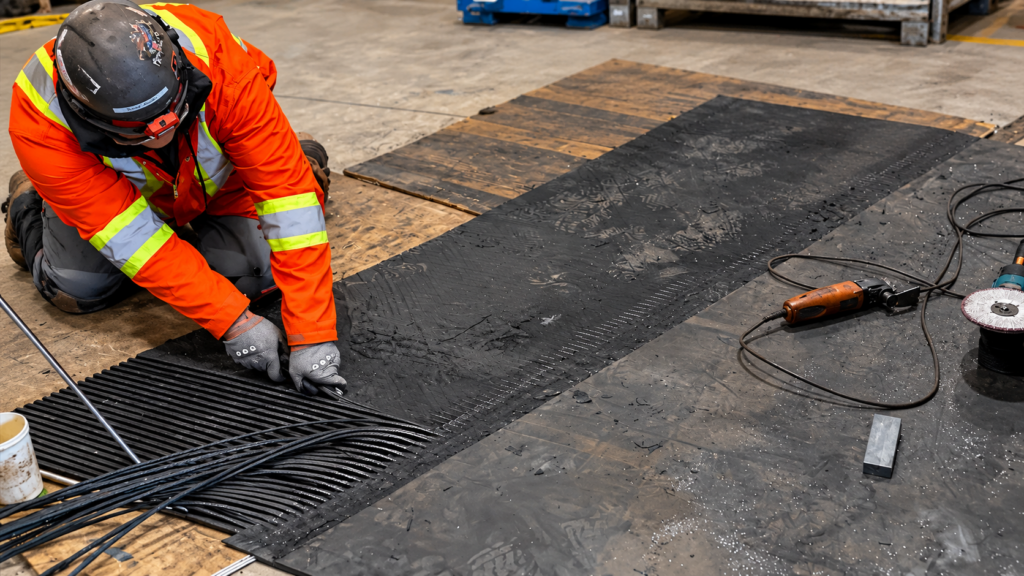
During hot vulcanization, technicians control belt-end alignment, surface preparation, pressure, temperature, cure time and cooling. The cure cycle is determined by the rubber compound’s cure characteristics and overall splice gauge, rather than a universal time-per-thickness rule. This ensures the materials flow, bond and reach the required state of cure without under-curing or excessive heat exposure. Cold bonding or mechanical fastening may be considered when the belt, operating conditions or field requirements call for a different approach.
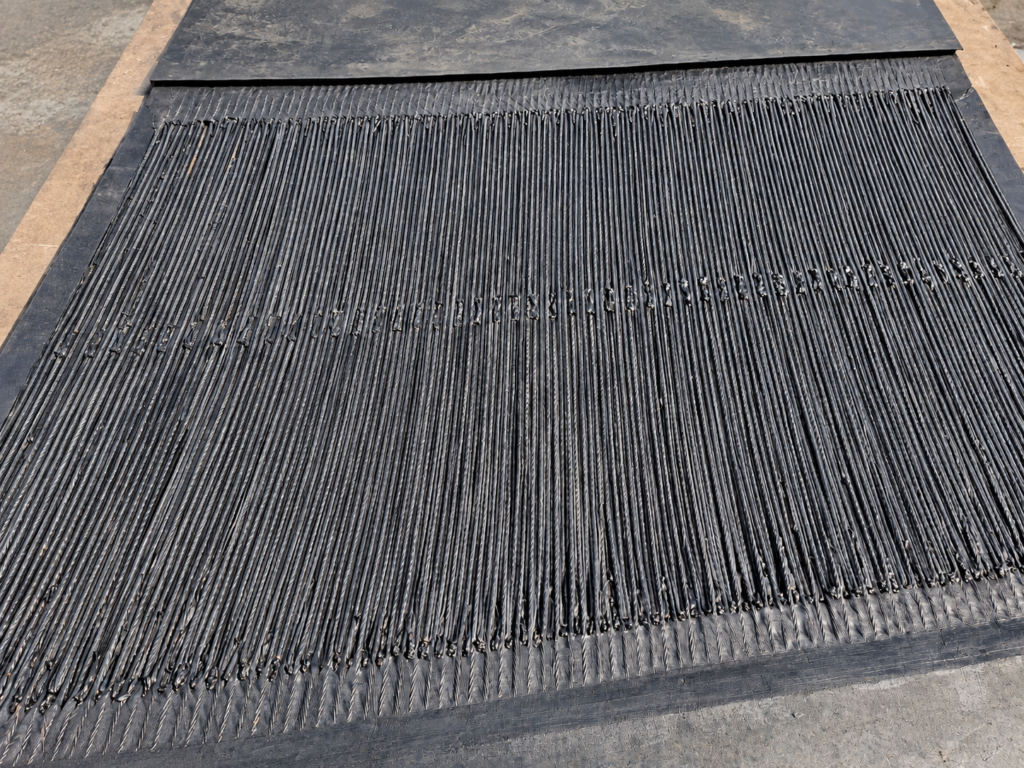
Quality checks include visual inspection and dimensional verification, with optional dynamic X-ray inspection for steel-cord alignment and splice integrity. Results can also support preventive maintenance planning and event-driven belt diagnostics.