KEY ADVANTAGES
- Belt mistracking can be caused by a variety of factors, including loading conditions, material buildup, component alignment, and belt or splice issues.
- Edge wear, contact marks, and recurring material spillage can be early warning signs, but they do not always identify the root cause on their own.
- Documenting where belt drift occurs and the operating conditions at the time can help support a more effective troubleshooting process.
- Long-term improvement comes from addressing the underlying cause of the issue. A temporary correction does not always mean the problem has been fully resolved.
Conveyor belt tracking refers to how well a belt stays aligned with its intended path. When a belt moves off-center, known as mistracking, it can contact surrounding components, leading to material spillage, increased wear, and potential equipment damage. While some belt movement is normal, persistent drift, especially when accompanied by rubbing, visible wear, or material loss, often indicates an underlying issue. Identifying the root cause is essential to achieving long-term tracking performance.
Several conditions can influence the belt’s path, and more than one may be present at the same time:
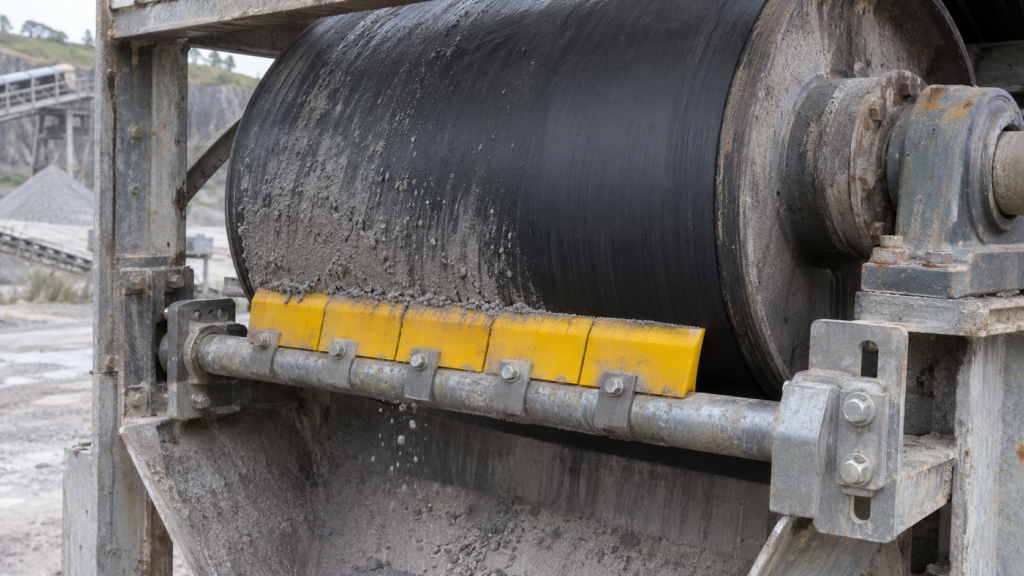
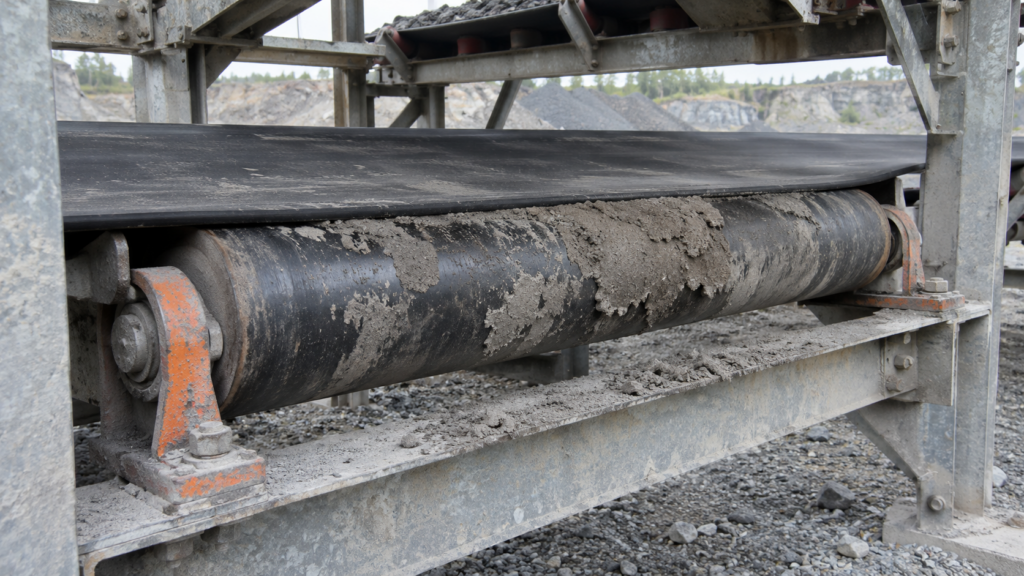
- Material buildup: Carryback accumulating on pulleys or return idlers changes the surfaces supporting and guiding the belt. Uneven buildup can contribute to sideways movement.
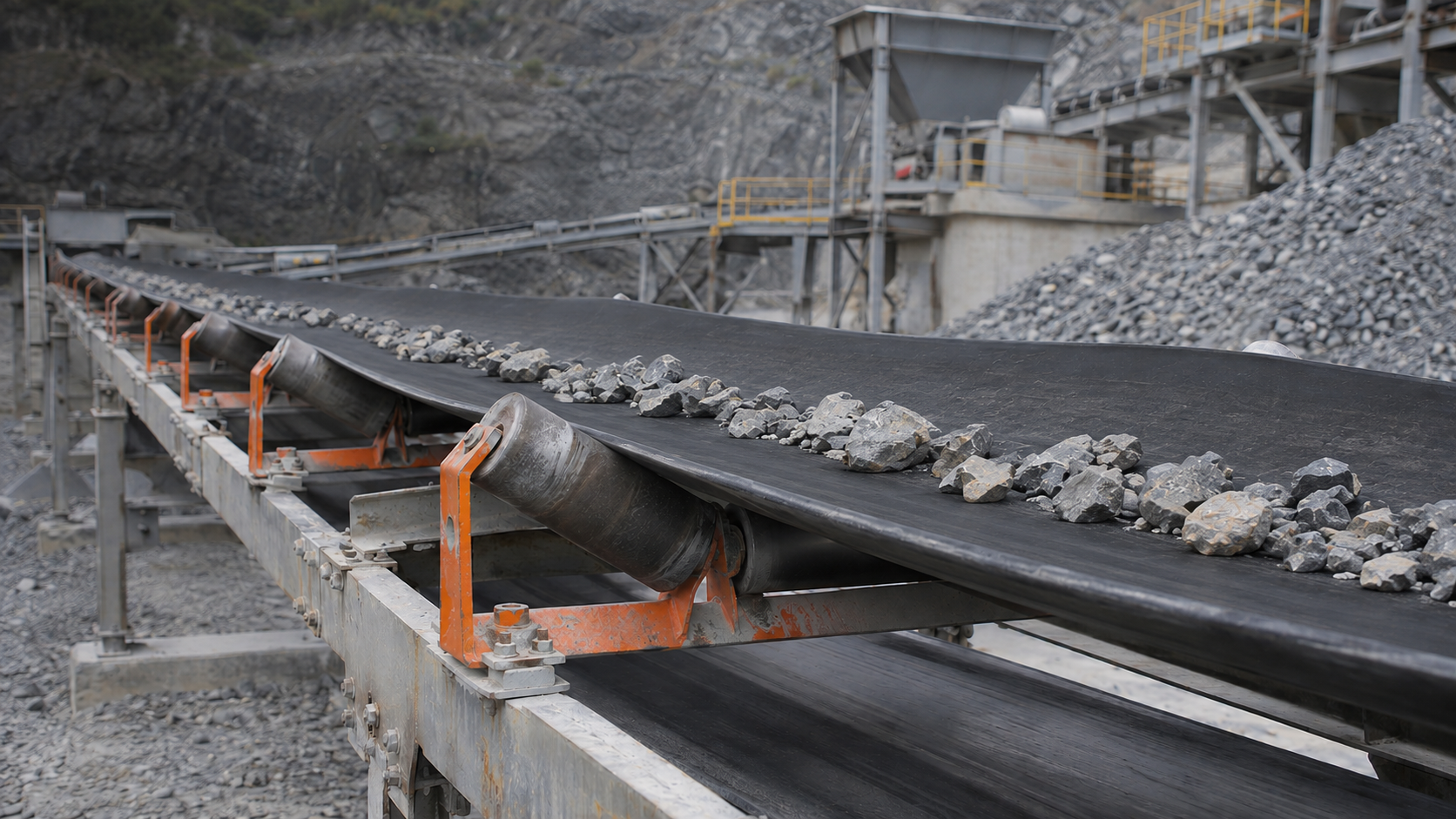
- Off-centre or uneven loading: Material deposited unevenly across the belt creates an unbalanced loading condition that can affect tracking through the carrying section.
- Component or structural alignment: Misaligned pulleys, idlers or supporting structures can steer the belt away from its intended path. Damaged or seized rollers also warrant attention.
- Belt and splice condition: A splice that is not square, or irregularities in the belt’s shape, can contribute to recurring drift. These possibilities require assessment rather than an assumption that the belt must be replaced.
A useful investigation considers both operating conditions and equipment condition. Changing a tracking adjustment without understanding those influences can leave the original cause in place.
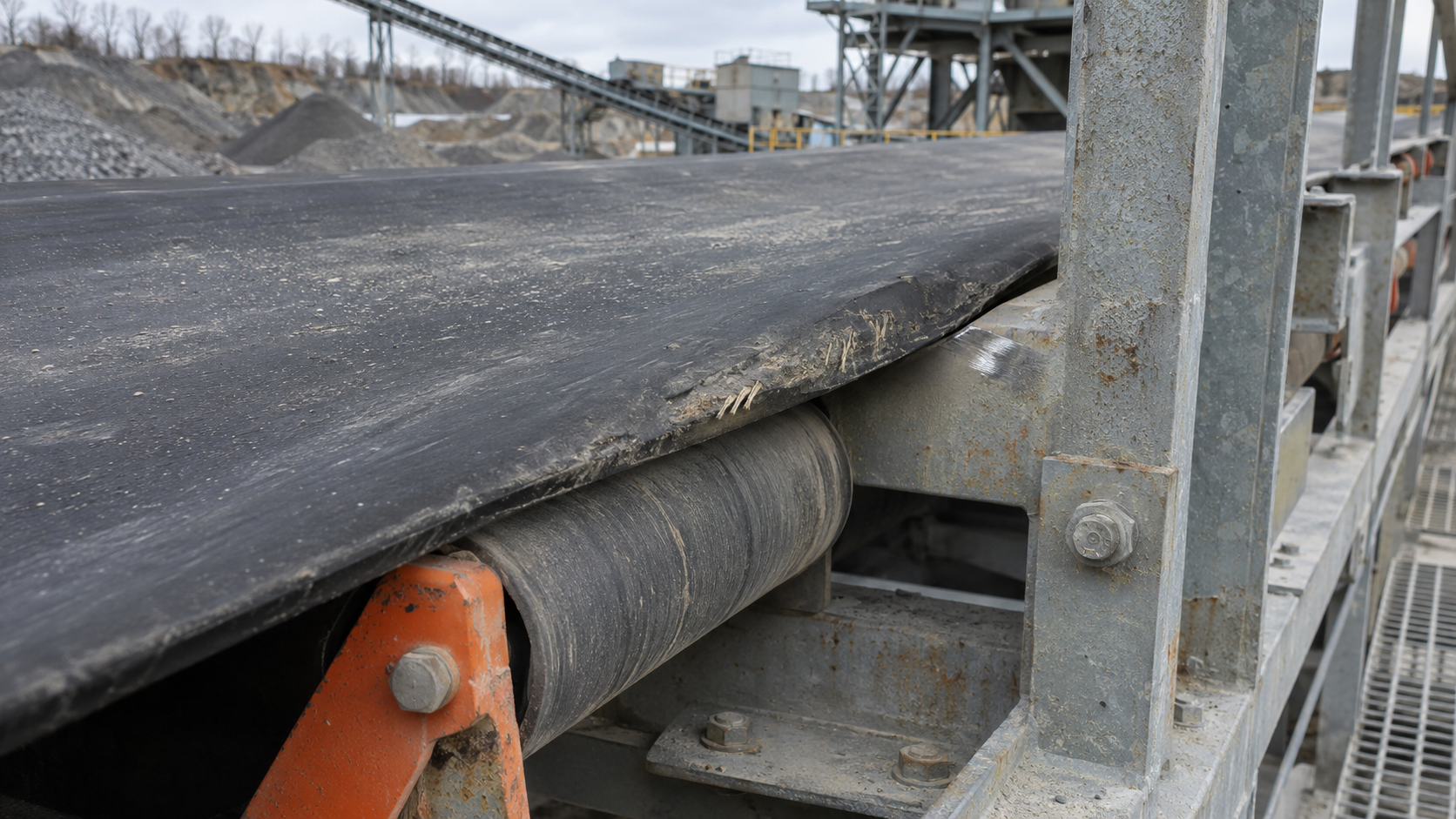
Look for patterns that show where the belt’s path or its interaction with surrounding components has changed. Useful observations include fraying or wear along an edge, repeated contact marks on structure, uneven wear around the conveyor and material collecting in the same area after cleanup.
These signs need interpretation. Spillage, for example, may accompany mistracking, but it can also result from inadequate sealing, overloading or other load-zone conditions. Similarly, existing edge damage does not reveal when the damage occurred or whether the original cause remains active.
For a clearer assessment, record the location, the direction of drift and the circumstances in which it appears. Note whether it is observed with material on the belt, whether it recurs in the same area and whether recent maintenance or a splice repair preceded the change. These details provide context without turning an observation into an unsupported diagnosis.
Persistent contact between a moving belt edge and fixed conveyor structure can wear the edge and damage surrounding components. If material is progressively lost from the edge, the usable belt width may be reduced. The consequences depend on the severity and duration of contact, not simply on whether a belt looks slightly off-centre.
Mistracking can also affect containment at the loading point. When a belt wanders out from beneath a skirt seal, the unsupported seal can become damaged as the belt moves back. This can increase spillage and add to the cleaning and maintenance workload.
Accumulated material may then contribute to further operating problems, particularly if it reaches rolling components. Investigating recurring spillage alongside tracking behaviour can therefore be more useful than treating cleanup as an isolated housekeeping task.
An effective response begins with a clear description of the problem and an assessment by personnel familiar with the conveyor. Loading, buildup, alignment and belt or splice condition should be considered as relevant to the observed pattern. Any corrective measure should address the identified condition and suit the equipment and application.
Observations must be made from safe locations with guards in place. Hands-on inspection, cleaning, adjustment and repair must follow the site’s isolation procedures and applicable manufacturer instructions. Never reach toward a moving belt or attempt to steer it by hand.
Keep a record of the findings and corrective work so subsequent observations can be compared with the original concern. Repeated drift after an intervention is a reason to revisit the assessment rather than assume that another identical adjustment will resolve it.
When contacting Endurance Belting, share the belt specification, conveyed material, problem location and observed operating conditions. This gives the team a practical starting point for discussing your belt and application and identifying the relevant support needs.