
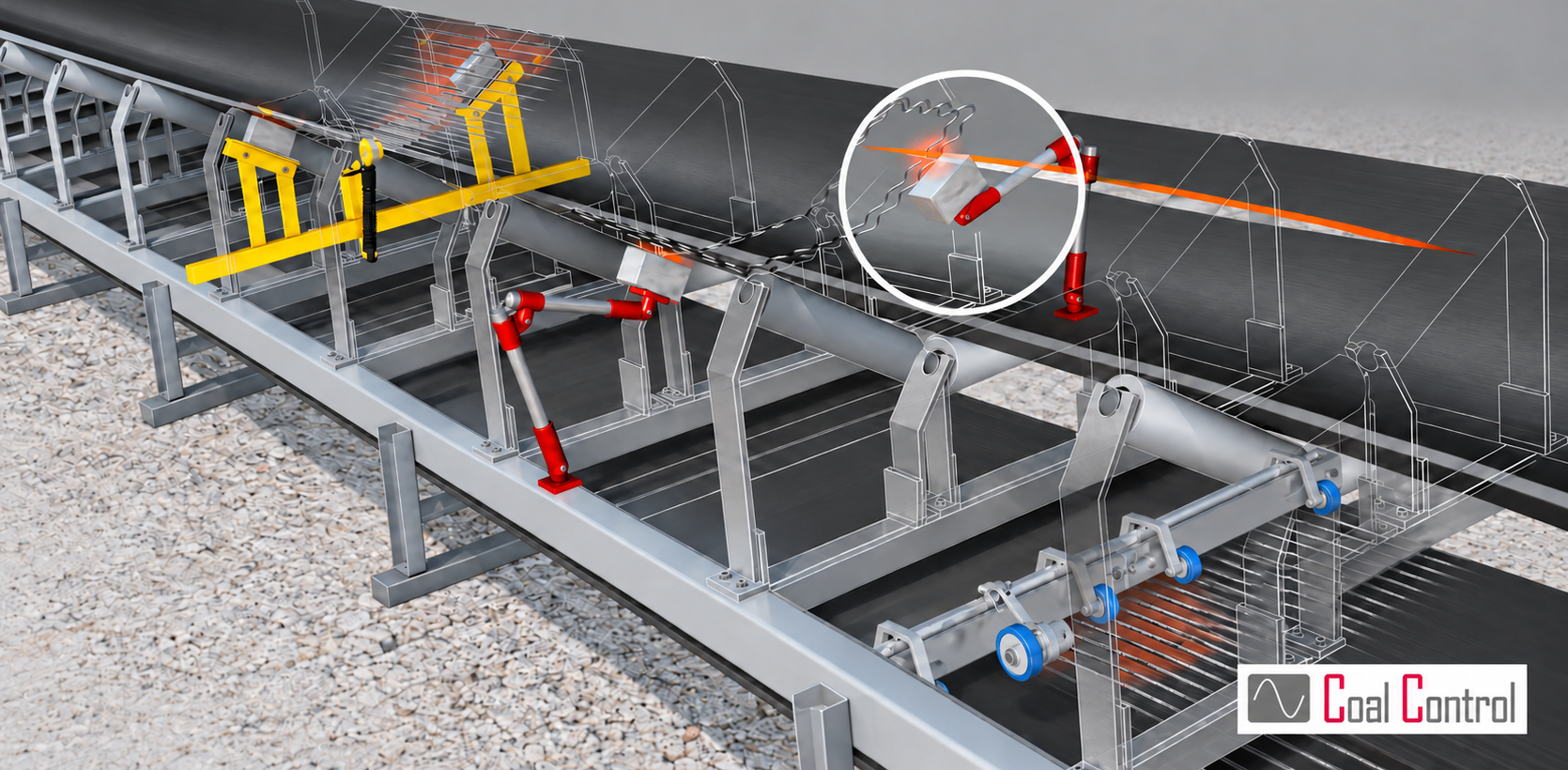
A longitudinal rip often begins when a sharp foreign object punctures the belt and becomes trapped in the conveyed material, chute or conveyor structure. Loading and unloading points present particular risk because material flow, impact and fixed equipment come together in the same area. If the conveyor continues running, an initial puncture can quickly develop into extensive belt damage and unplanned downtime.
Endurance reviews belt construction, cover gauge, conveyor length, speed and direction, along with loading, discharge and transfer areas where longitudinal damage is most likely to begin. These factors determine loop spacing and the number and location of monitoring points. Loops can be incorporated into new Endurance steelcord or textile belts during manufacture. Retrofitting loops into an existing belt requires a technical review of its construction, cover gauge and condition.
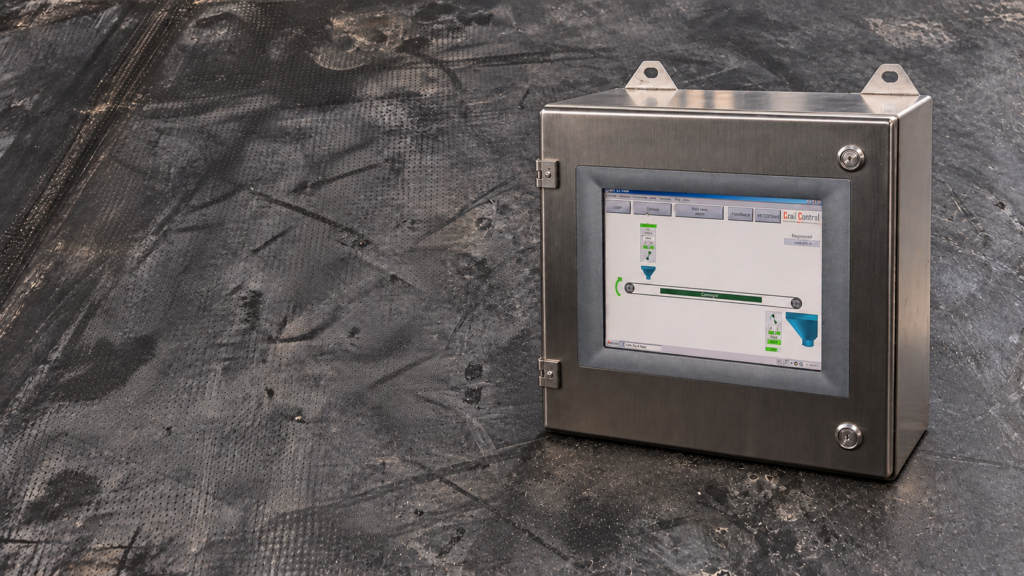
Rip Control records and evaluates measurement data to support early damage assessment and faster response by operating teams. System functions can include fault and user logs, progressive loop-damage display, running-direction detection, removal of damaged loops from active monitoring and communication with the control room. Optional monthly monitoring provides additional review of system condition and fault history. For higher-risk conveyors, Rip Control can also be combined with Endurance elastic transverse steelcord breakers, providing additional resistance to puncture and rip propagation while the detection system helps identify a developing rip before damage becomes more extensive.