KEY ADVANTAGES
- Belt cleaners remove material that remains on the carrying surface after discharge, helping limit carryback along the return run.
- Controlling carryback can reduce recurring cleanup and wear associated with material buildup on conveyor components.
- Cleaning performance depends on the material, belt and splice compatibility, cleaner selection, and maintenance condition.
- Persistent carryback deserves investigation; repeated cleanup alone leaves the underlying problem unresolved.
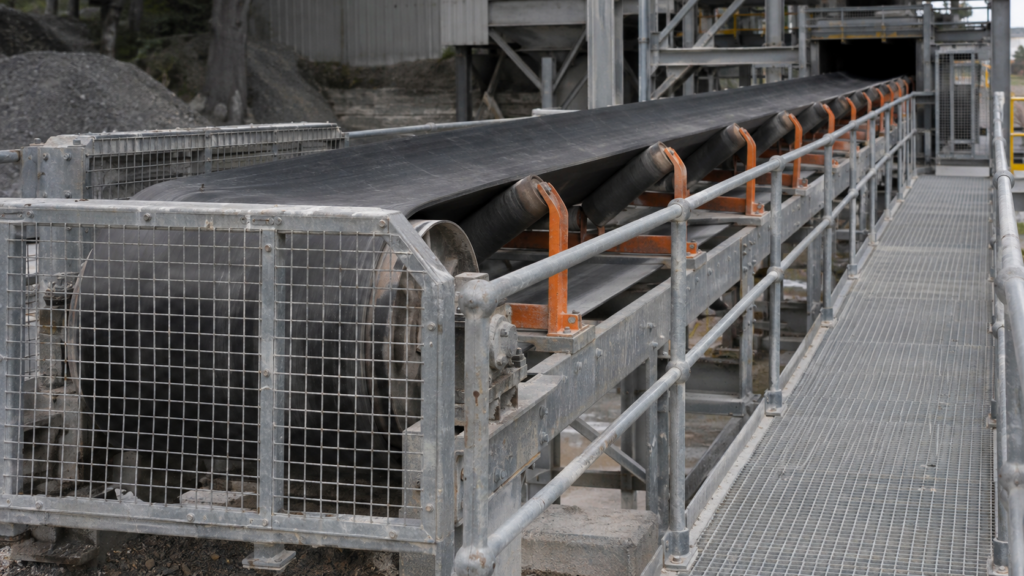
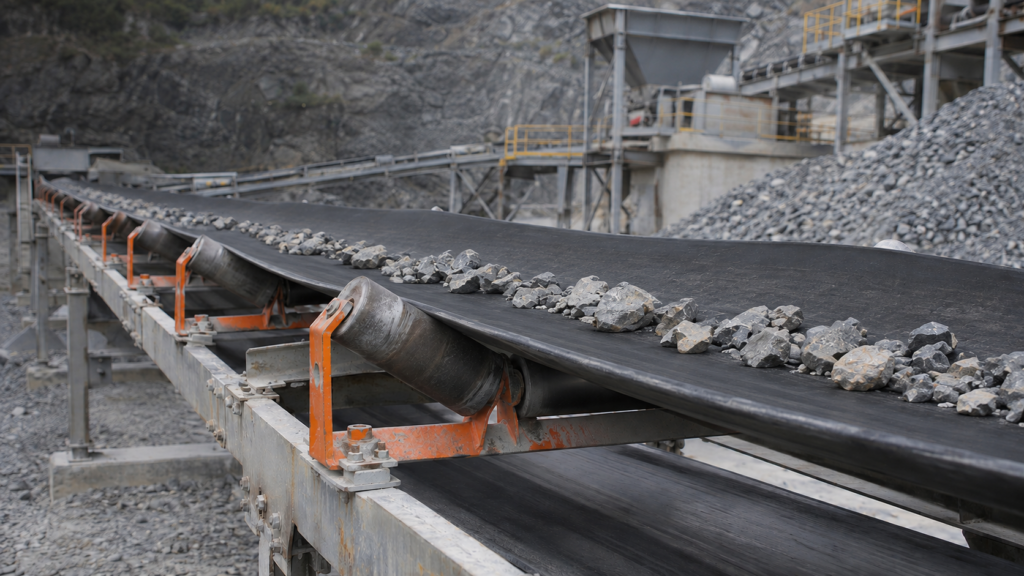
Most conveyed material leaves the belt at the discharge point, but some can remain attached to its carrying surface. This residual material is called carryback. As the belt travels along the return run, it can deposit material on components or release it onto the ground below.
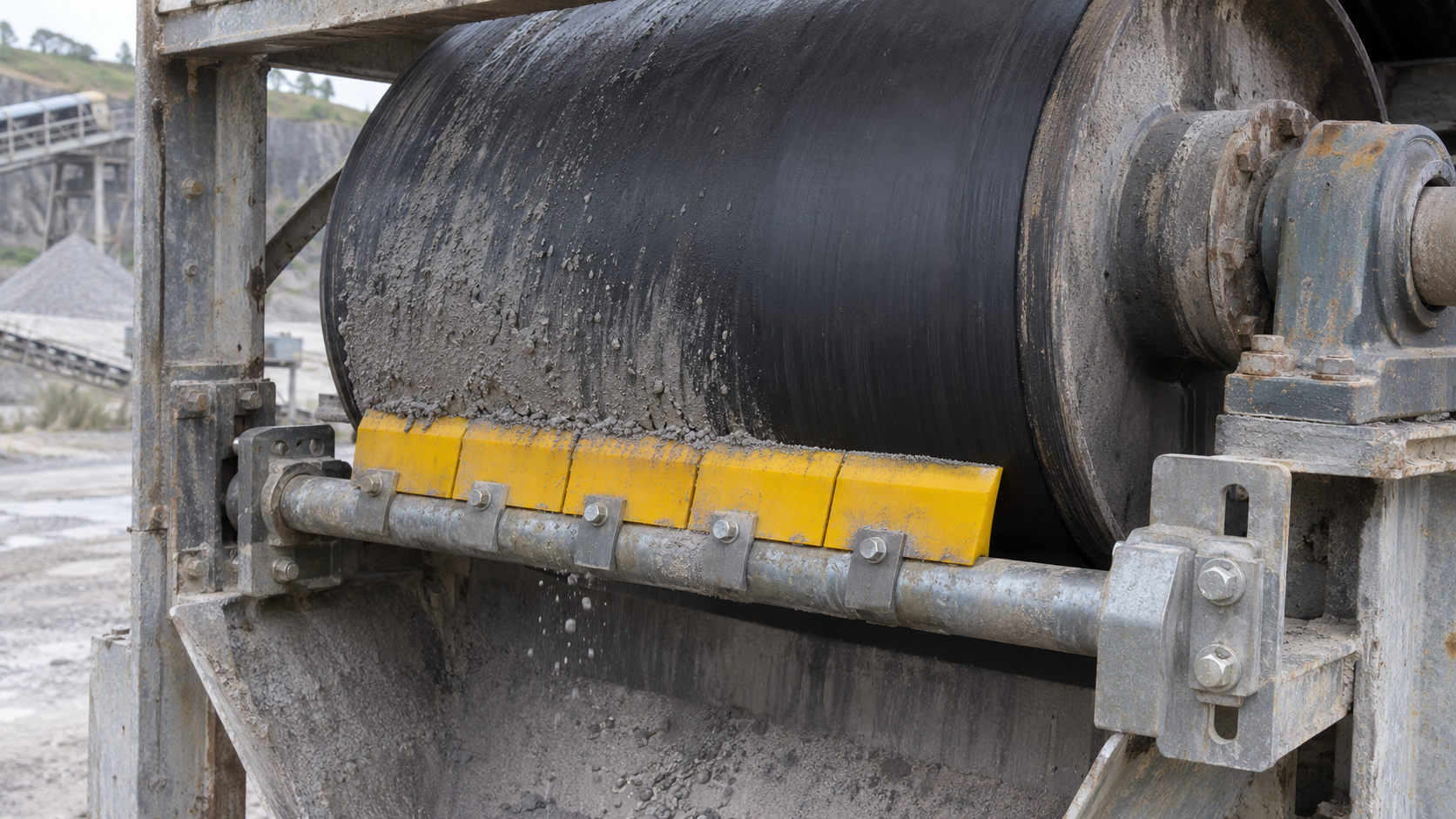
Belt cleaners help remove that residue near the discharge point. A primary cleaner typically removes the bulk of the adhering material at the head pulley. Where the application requires further cleaning, a secondary cleaner addresses material remaining beyond the primary cleaning stage.
The required arrangement depends on the application. Sticky, moist material may present a different cleaning challenge from dry, free-flowing bulk solids. The aim is to control the residue before it spreads along the conveyor, with equipment suited to the belt and operating conditions.
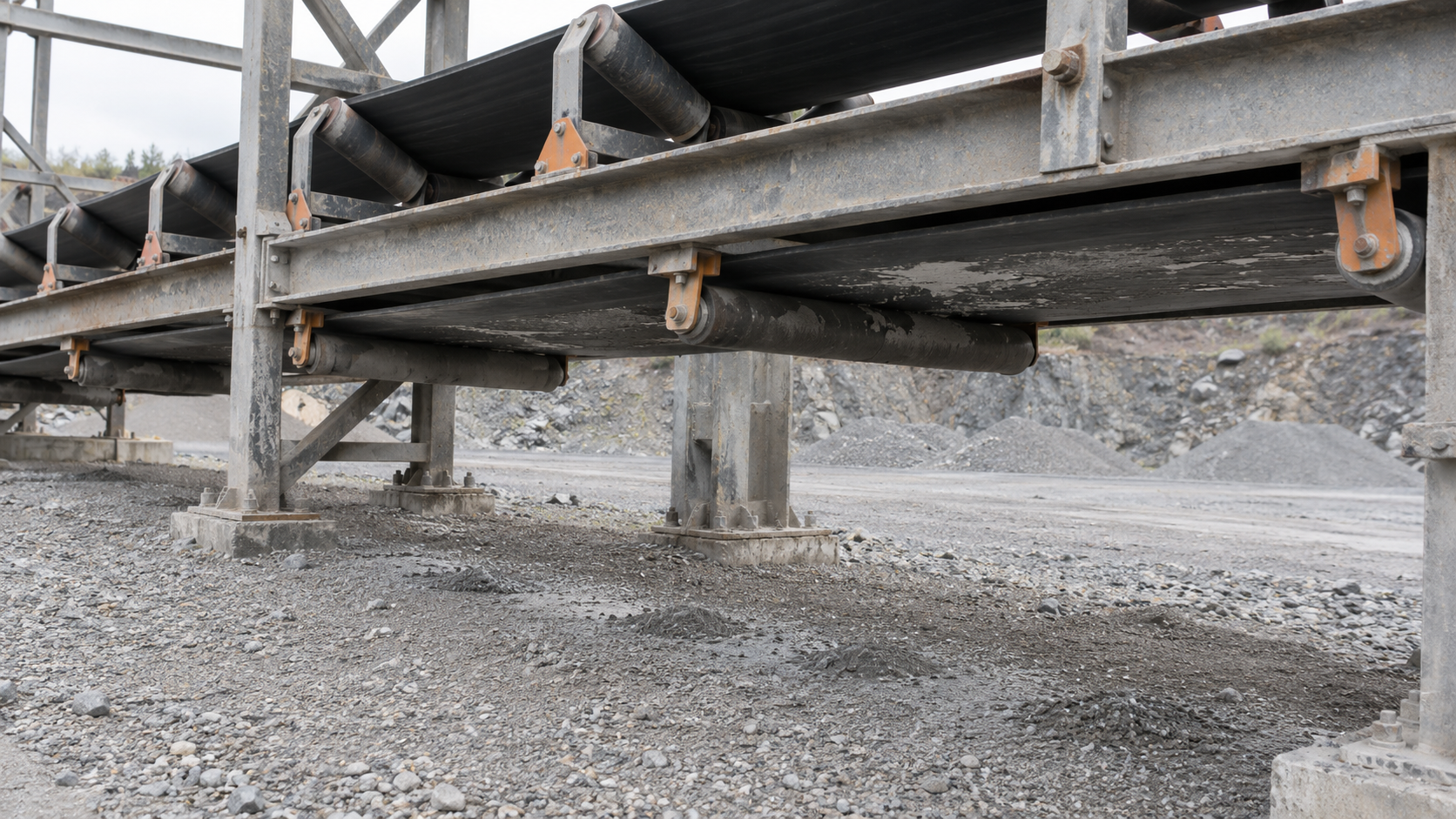
Carryback can turn a localized cleaning issue into a recurring maintenance burden. Material falling beneath the return run creates deposits that must be removed, while material accumulating on rollers and pulleys can affect how the belt contacts those components.
Uneven buildup can contribute to mistracking, and abrasive residue can increase wear at affected contact surfaces. Effective cleaning helps limit these mechanisms, although it cannot correct unrelated alignment, loading or component problems. Reduced buildup supports component condition; it does not establish a guaranteed increase in service life.
The consequences also extend to the work area. Deposits on walkways or around access points can create slip and trip hazards and make maintenance access more difficult. Reducing carryback can reduce the amount of material requiring cleanup, but it does not replace housekeeping or safe access controls.
Not every pile beneath a conveyor comes from carryback. Spillage at loading or transfer points has different possible causes. Identifying where the material originates is essential before treating the cleaner as the solution.
A cleaner must suit both the conveyed material and the belt it contacts. Selection involves belt width and speed, splice type, material abrasiveness, moisture and stickiness, as well as the available installation and maintenance space.
Compatibility matters throughout the cleaning arrangement. Blade material and design need to be appropriate for the belt surface and splice. A cleaner selected for one duty should not automatically be assumed suitable after a belt, splice or material change.
Condition and maintenance also influence the result. Worn cleaning elements, unsuitable contact or an arrangement that no longer matches the duty can leave residue behind. Cleaner tension and maintenance requirements should follow the equipment manufacturer’s instructions; adjustment is not a substitute for confirming suitability.
For purchasing decisions, the useful starting point is a clear description of the operating duty and existing belt construction. Selecting by belt width alone leaves important compatibility and performance questions unanswered.
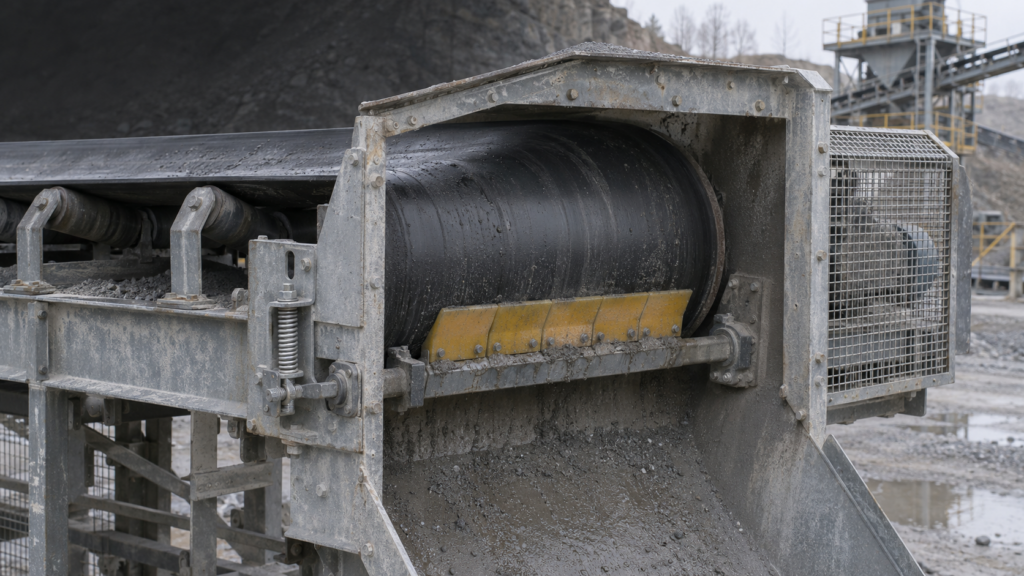
Recurring deposits beneath the return run are a useful warning sign, especially when the same locations need repeated cleanup. Other signs include material remaining on the belt beyond the cleaning stages, uneven residue across the carrying surface, and buildup on return rollers.
These observations indicate a need for assessment, rather than proving a single cause. A change in material moisture, belt condition or cleaner wear may be relevant. Recording when the problem appears and whether it follows a change in operating conditions can help maintenance teams narrow the investigation.
Observations must be made from designated safe locations with guards in place. Hands-on inspection, cleaning, adjustment or replacement requires isolation and lockout under the applicable site procedure. Never reach into moving equipment to remove residue or check cleaner contact.
Cleaning performance deserves attention alongside belt condition, tracking and component condition. A conveyor can continue moving material while carryback gradually increases the work needed to keep the surrounding area and return components clear.
Maintenance records can connect recurring deposits with cleaner condition and changes in duty. They also help distinguish a temporary change in material behavior from a persistent cleaning problem that needs a planned intervention.
The practical objective is to reduce the repeated accumulation of material at its source. When carryback persists, assess the cleaning arrangement together with the belt, splice and conveyed material. That provides a stronger basis for maintenance or equipment decisions than treating each new deposit as an isolated housekeeping task.