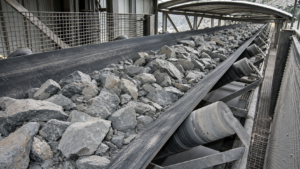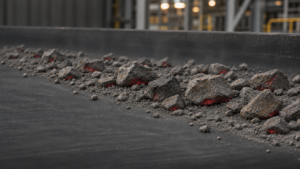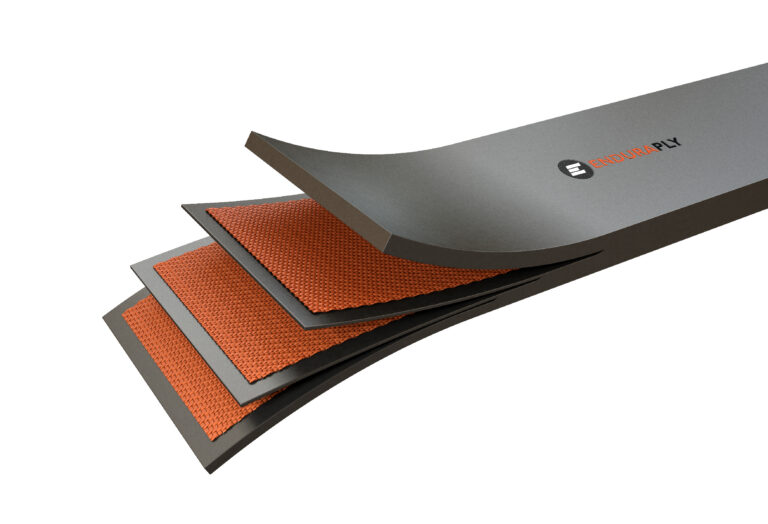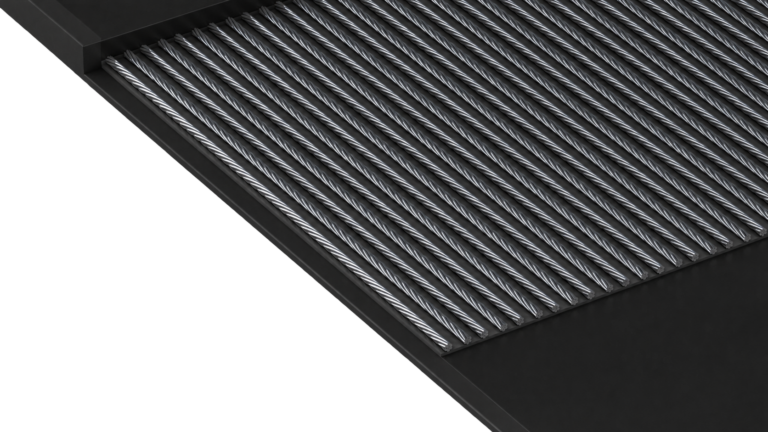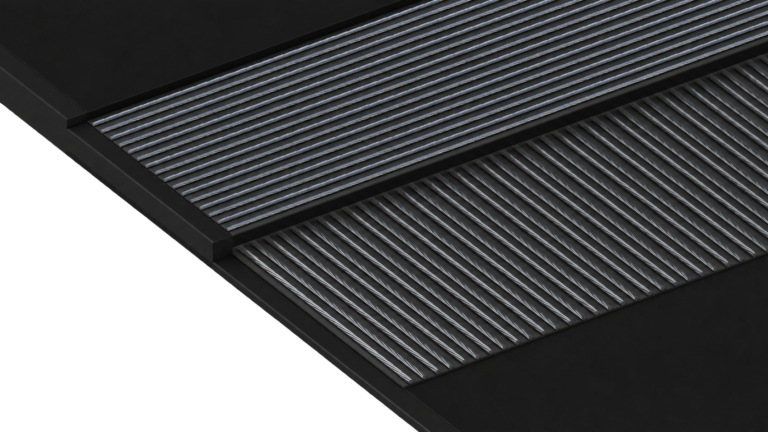

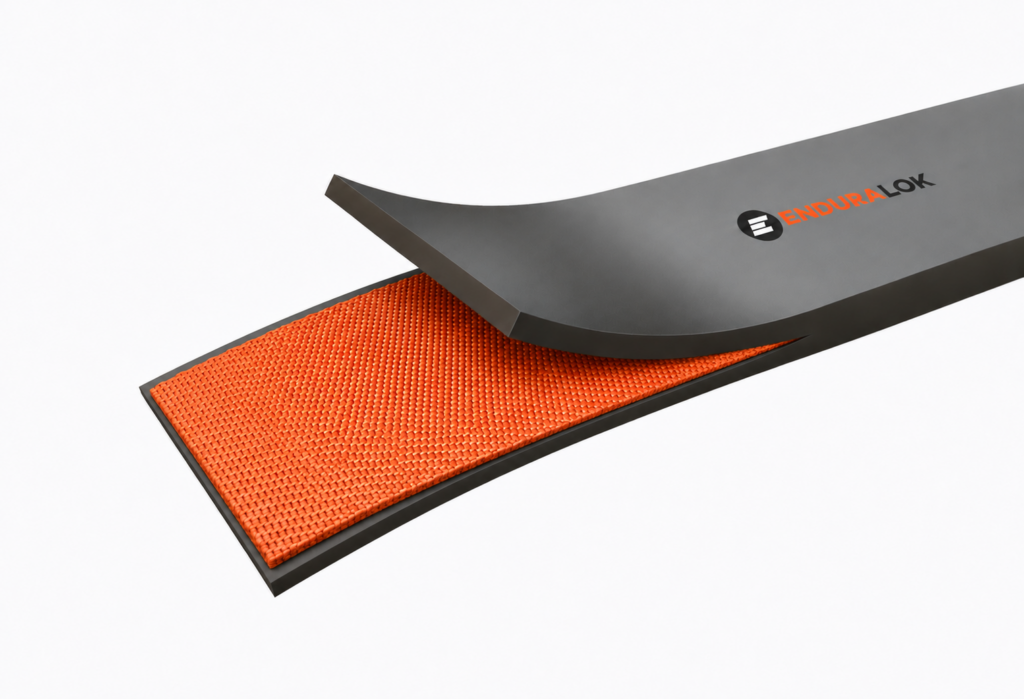

Straight warp conveyor belting is a durable textile construction engineered for demanding bulk-material applications where concentrated impact, puncture and longitudinal-rip exposure can challenge conventional belt designs. Its load-bearing warp yarns follow the belt length, while substantial transverse reinforcement helps the carcass withstand loading-zone forces.
Endurance matches the carcass, working rating, width, cover compound, pulley compatibility and splice strategy to the conveyor as a complete system. Application review, splice planning, installation support and ongoing inspection can be coordinated through Endurance’s worldwide network and local partners.
Straight warp conveyor belt construction
The carcass must balance longitudinal tension control with transverse support, impact response, troughability and a practical splice system.
- Carcass construction: Straight-warp construction addresses the belt’s internal load path, while the cover compound is selected separately for abrasion, cutting, temperature, fire or chemical exposure.
- Loading-zone conditions: Lump size, material density, drop height, trajectory and impact support influence carcass requirements and the need for additional reinforcement.
- Troughability: Belt width, rating, carcass stiffness, idler angle and transition geometry determine whether the belt can form the required trough without damaging edge or centre regions.
- Pulley compatibility: Minimum pulley diameters must be confirmed based on the selected construction, operating tension and splice.
- Splice design: Vulcanized and mechanical splice options should be evaluated based on belt construction, rating, pulley size, service conditions and maintenance strategy.
- Additional reinforcement: Breaker reinforcement may be appropriate where impact, puncture or rip-propagation exposure warrants added protection, provided the construction remains compatible with the conveyor geometry.
- Operating requirements: Final belt selection is based on the complete duty, including construction, rating, covers, reinforcement and splice requirements.
Primary crushers and feeders
Straight warp belting may be suitable where large or sharp material creates concentrated impact, puncture and rip exposure. Confirm lump size, drop height, material trajectory, feeder duty, impact-bed condition and the selected splice.
High-impact transfer points
Transfers can combine impact with mistracking, entrapment, and skirt damage. Evaluate belt construction together with chute geometry, receiving-belt speed, impact support, sealing systems and foreign-object controls.
Pit and plant conveyors
For belts carrying coarse material between mining or processing stages, review operating tension, center distance, elevation change, take-up travel, transition length and pulley diameters before selecting the carcass.
Stackers and ship loaders
Mobile or slewing equipment can introduce repeated flexing, variable loading and changing alignment. Confirm troughability, pulley compatibility, splice behavior and the operating envelope across every machine position.
Severe bulk-material handling
In aggregate, cement and steel operations, the critical exposure may be abrasion, cutting, heat, oil or a combination of conditions. Select the carcass first, then match the cover and any additional reinforcement to the application requirements.