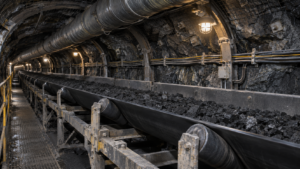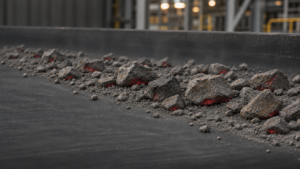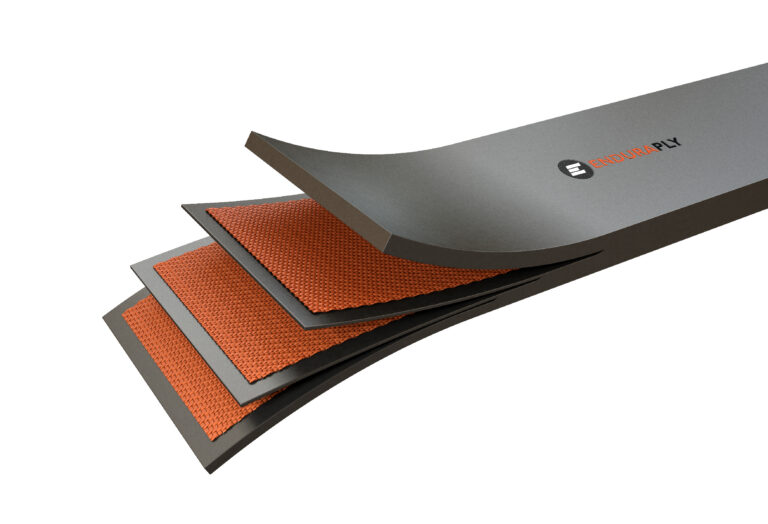
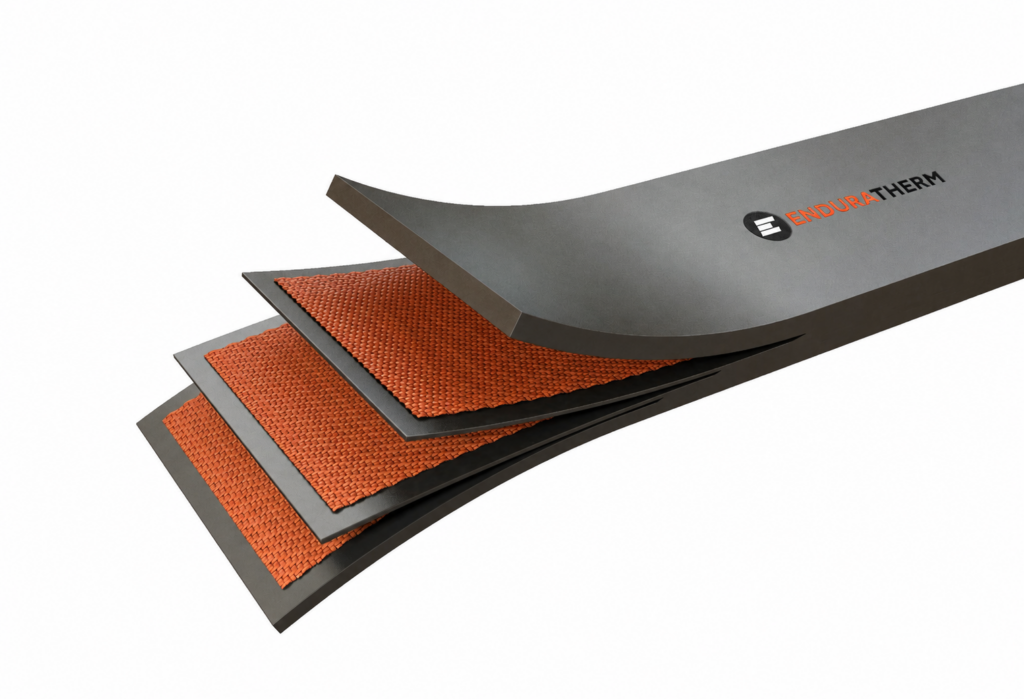


Enduratherm heat-resistant belting combines application-specific cover compounds with textile, heat-resistant nylon or steelcord carcasses. Depending on the compound selected, covers offer heat resistance as well as protection against cracking, abrasion, chemicals, flame and oil.
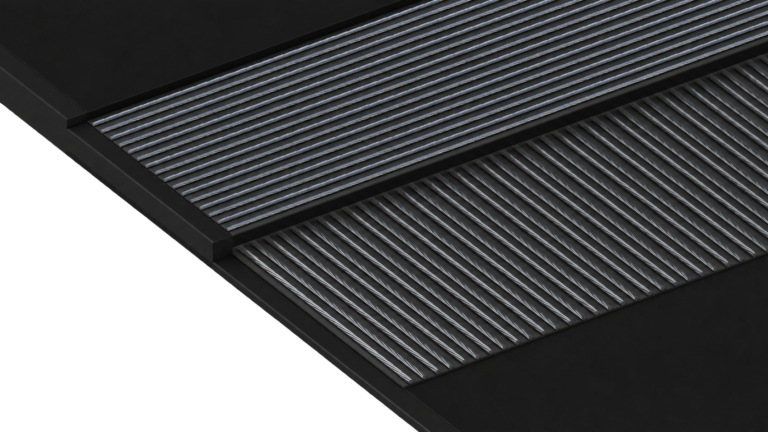
Optional steelcord or basalt breakers provide load support and protection against punctures and rips. They also help prevent splitting as the rubber between steel cords becomes brittle and protect the carcass from burn-through caused by red-hot material.
Match the belt to the application
- Anti-cracking
- Splicing reliability
- Maintains belting flexibility
- Wide selection of heat-resistant covers available
Cement clinker
Clinker temperature, lump size and contact time must be evaluated together. Fine clinker can hold heat against the cover, while larger pieces can create concentrated thermal and impact exposure.
Sinter and coke
Repeated loading of hot, abrasive material can combine thermal aging with cutting and cover wear. Compound, cover gauge, carcass and breaker selection must be reviewed together in each application.
Ore pelletizing
Pellet temperature, rolling behavior and loading conditions determine the required heat and abrasion balance. Conveyor speed and cooling distance influence the belt-surface temperature.
Calcined lime
Heat, abrasion and possible chemical exposure should be reviewed together. Material condition and dust generation can affect both cover selection and maintenance/upkeep requirements.
Smelting, refining and steel mills
Hot, sharp or irregular material may require more than a heat-resistant cover. The review should include impact support, transverse reinforcement, carcass insulation and loading-point control.
Hot tar and asphalt
TEG provides a starting point where both heat and oil exposure are present. The actual oil or hydrocarbon, concentration, temperature and contact duration must be confirmed. Minimum operating temperature is down to 22 ℃